

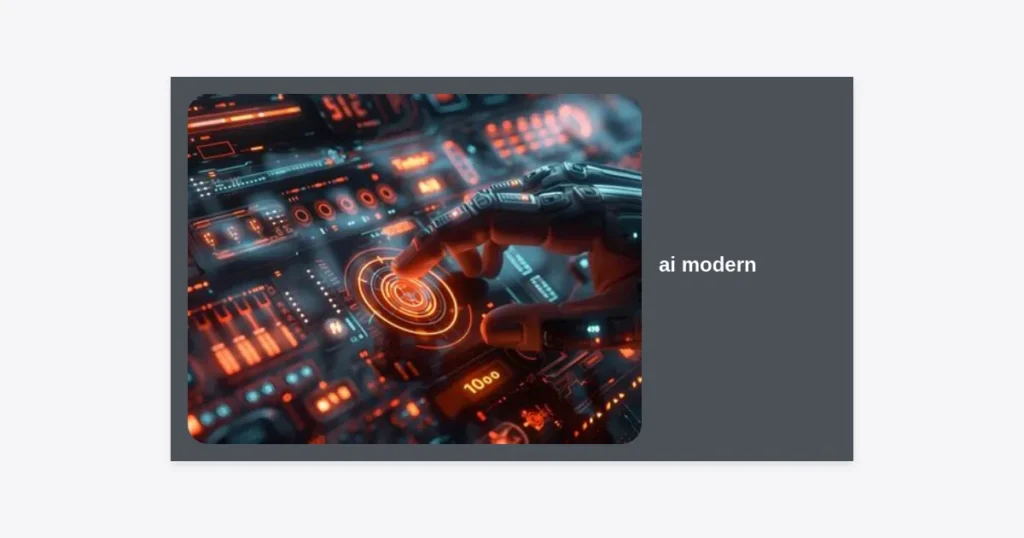

In the last decade, we have transitioned from a world where artificial intelligence was a niche academic pursuit to one where ai modern technology powers our smartphones, diagnoses diseases, and handles complex global logistics. This isn’t just a trend; it’s a fundamental shift in how humanity interacts with information and machines. Whether you are a business leader, a student, or a tech enthusiast, understanding ai modern frameworks is no longer optional—it is essential for navigating the 21st century.
Table of Contents
Defining the AI Modern Era: Beyond Algorithms
To understand the current state of technology, we must first define what makes ai modern distinct from the “Good Old Fashioned AI” (GOFAI) of the 1980s. Historically, AI relied on rigid, rule-based systems. If X happens, then do Y. While effective for simple tasks, these systems lacked the flexibility required to navigate the complexities of the real world.
Today, ai modern systems are defined by their ability to learn and adapt autonomously. This shift has been fueled by three primary drivers: massive data availability, specialized hardware (like GPUs and TPUs), and breakthroughs in neural network architectures. We are now living in an era where AI can perceive context, generate creative content, and engage in logical reasoning that rivals human performance in specific domains.
“Modern AI is not just another tool in the shed; it is the light by which we will discover the next generation of human potential.” – Industry Expert Insight
The Core Technologies Driving Modern AI
To truly grasp the capabilities of ai modern solutions, it is crucial to break down the technical pillars that uphold this ecosystem. These aren’t just buzzwords; they represent the engineering marvels that make self-driving cars and instant translation possible.
Machine Learning and Deep Learning
At its heart, ai modern is built on Machine Learning (ML). Unlike traditional programming, ML provides computers with the ability to learn from data without being explicitly programmed for every scenario. Deep Learning, a subset of ML, uses multi-layered neural networks to mimic the human brain’s structure. This is what allows systems to recognize a face in a crowd or identify a tumor on an X-ray with super-human accuracy.
Natural Language Processing (NLP)
Perhaps the most visible part of ai modern technology is NLP. With the advent of Large Language Models (LLMs), machines can now understand semantics, tone, and intent. This has transformed customer service via chatbots and skyrocketed productivity through generative writing tools.
Generative AI and Creative Synthesis
We are no longer limited to predictive AI. The ai modern landscape now includes Generative AI, capable of creating original images, videos, and music. Models like Stable Diffusion and GPT-4 represent a milestone where AI transitions from an analytical tool to a creative partner.
Real-World Applications Across Industries
How does ai modern manifest in the daily operations of global industries? The integration is deeper than many realize. Let’s look at how specific sectors are being transformed by ai modern approaches.
Healthcare: Saving Lives with Precision
In healthcare, ai modern tools are streamlining patient care. For instance, DeepMind’s AlphaFold has solved the 50-year-old challenge of protein folding, which could lead to breakthroughs in drug discovery that previously took decades. Some of the practical applications include:
- Early Diagnosis: AI algorithms analyzing medical imaging to detect cancers far earlier than the human eye.
- Personalized Medicine: Matching treatments to a patient’s specific genetic profile.
- Vitals Monitoring: Wearable tech using AI to predict potential cardiac events before they happen.
Business and Finance: Efficiency at Scale
In the financial sector, ai modern platforms handle millions of transactions per second. Fraud detection systems use real-time pattern recognition to flag suspicious activity, saving billions of dollars annually. Furthermore, businesses use ai modern analytics for hyper-accurate demand forecasting, reducing waste in supply chains and ensuring products are where they need to be, when they need to be there.
The Creative Economy: A New Frontier
Content creators are leveraging ai modern tools to automate repetitive tasks like video editing or color grading. This allows artists to focus on the high-level vision rather than the technical minutiae. Marketing agencies use AI to generate hundreds of ad variations, testing which ones resonate best with specific demographics in real-time.
Actionable Advice for Leveraging AI Today
Entering the ai modern space can feel overwhelming. However, you don’t need a PhD in data science to start benefiting from these tools. Here is a practical roadmap for individuals and small business owners to begin their ai modern journey.
- Identify Low-Hanging Fruit: Look for repetitive, data-heavy tasks. If you spend three hours a day answering support emails, an ai modern chatbot or email assistant is your first priority.
- Adopt an AI-First Mindset: Instead of asking “Can I do this?”, ask “Can an AI tool help me do this faster?” Familiarize yourself with tools like ChatGPT, Claude, and Midjourney to understand their strengths and limitations.
- Invest in Data Literacy: AI is only as good as the data it receives. Learn the basics of data cleaning and prompt engineering. The quality of your input (prompts) directly dictates the quality of the ai modern output.
- Focus on Human-AI Collaboration: Don’t aim to replace humans; aim to augment them. The most successful implementations of ai modern tech involve a “human-in-the-loop” system where the AI does the heavy lifting and the human provides the final creative or ethical check.
Navigating Ethical and Regulatory Landscapes
As ai modern systems become more pervasive, we must address the shadows they cast. Issues such as algorithmic bias, data privacy, and the environmental cost of training massive models are at the forefront of the global conversation.
Data privacy is perhaps the largest concern. Often, ai modern models are trained on vast datasets that may include sensitive information. Regulations like the EU’s AI Act are attempting to create frameworks that ensure transparency and safety without stifling innovation. It is vital for users to understand that ai modern does not operate in a vacuum; it requires responsible stewardship to prevent the reinforcement of societal biases.
The Future of AI Modern Integration
What does the next decade hold for ai modern development? We are moving toward “Agentic AI”—systems that don’t just answer questions but can execute multi-step plans autonomously. Imagine an AI agent that doesn’t just suggest a flight but books it, handles the hotel reservation, and adjusts your calendar when the flight is delayed.
Furthermore, the push toward Artificial General Intelligence (AGI) continues. While we aren’t there yet, the rapid pace of ai modern evolution suggests that we are moving closer to machines that can master any cognitive task a human can. The key for the future is adaptability. Those who learn to pivot and grow alongside these ai modern advancements will be the ones who thrive.
Key Takeaways for the Reader
The ai modern revolution is the defining event of our generation. We have explored its origins, the core technologies that drive it, and the practical ways it is changing industries from healthcare to the creative arts. As we conclude, remember these key takeaways:
- AI is Accessible: You don’t need to be a coder to use ai modern tools effectively.
- Augmentation Over Replacement: AI works best when it enhances human capability rather than trying to replicate it entirely.
- Stay Informed: The pace of ai modern change is exponential. Continuous learning is your best defense against obsolescence.
- Ethics Matter: Always use ai modern technology with an eye toward privacy, bias acknowledgment, and transparency.
Whether you are implementing AI in your business or just using it to manage your personal schedule, the ai modern era offers unprecedented opportunities for those willing to embrace the change. The future is automated, intelligent, and it is happening right now.